A breakroom is one of the most used spaces in an office, even though it’s rarely planned with the same care as workstations or conference rooms. The right breakroom furniture helps people step away from their desks, recharge, and return to work without the space feeling crowded, uncomfortable, or improvised.
At St. Charles Office Furniture, we help businesses plan breakrooms that are functional, durable, and appropriate for how the space will be used day to day. Whether you’re updating an existing office or building out a new one, thoughtful furniture choices make a measurable difference.
What a Break Room Is Really Used For
Break rooms aren’t just for meals. They serve multiple purposes throughout the day, including short breaks between meetings, informal conversations, and moments of quiet away from screens. Because of that, the furniture needs to support more than one type of use.
Some employees may only be in the space for ten minutes. Others may stay longer during lunch or use the room to reset between tasks. A well-planned break room accommodates all of that without feeling overdesigned or cluttered.
Why Break Room Furniture Matters More Than People Expect
Poorly chosen break room furniture leads to common issues: not enough seating, tables that don’t fit the space, chairs that wear out quickly, or layouts that make the room feel cramped during peak times.
Well-chosen furniture does the opposite. It improves comfort, supports informal interaction, and helps the room function smoothly even when multiple people are using it at once. Over time, it also reduces replacement costs by holding up to daily use.
Core Break Room Furniture Components
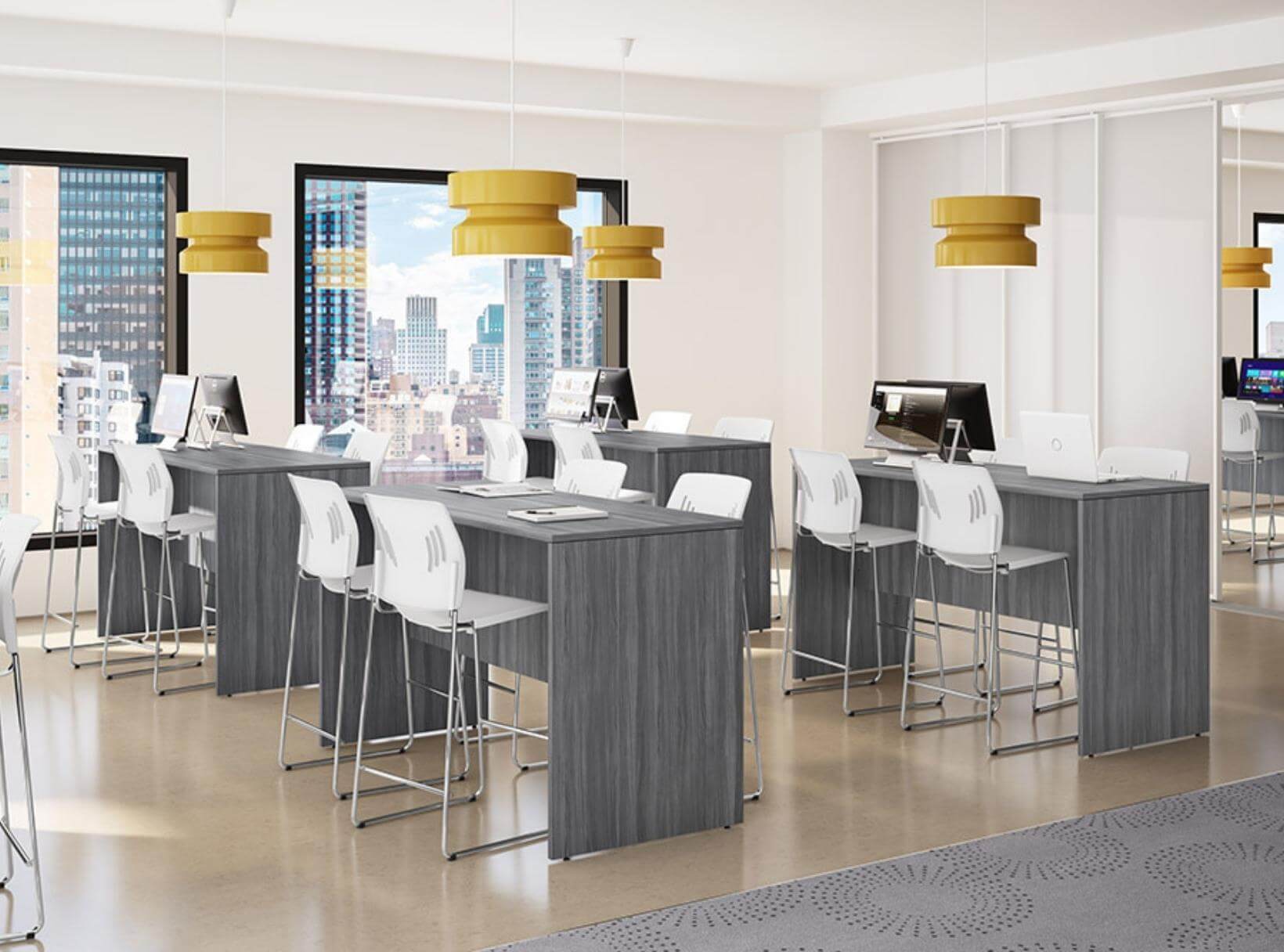
Tables are the foundation of most break rooms. Depending on the size and layout of the space, this may include standard dining-height tables, high-top tables for shorter breaks, or counter-height surfaces paired with stools. The right mix depends on how long people typically stay and how many employees use the room at the same time.
Seating should be comfortable but durable. Break room chairs see constant use, so materials and construction matter. Many offices benefit from a mix of café-style seating and more relaxed lounge options, especially in larger spaces.
In some offices, break rooms also include zones rather than a single layout. One area may be focused on eating, while another supports casual conversation or quiet downtime. Furniture that supports these different uses helps the space feel intentional rather than improvised.
Planning the Layout Before Choosing Furniture
Before selecting furniture, it’s important to understand how the room will flow. Doorways, appliances, traffic patterns, and clearances all affect how usable the space will be once it’s furnished.
We often recommend reviewing the layout with space planning and layout support before final selections are made. This allows furniture to be sized appropriately and arranged in a way that supports movement, seating capacity, and comfort without overcrowding the room.
Break rooms that are planned this way tend to age better and adapt more easily as teams grow or shift.
Durability, Maintenance, and Long-Term Use
Break room furniture needs to withstand frequent use. Easy-to-clean surfaces, sturdy frames, and contract-grade construction all help reduce maintenance issues over time. This is especially important in shared spaces where furniture is used by many people throughout the day.
Choosing furniture built for commercial environments also allows for consistency across locations or departments if the office expands or reconfigures in the future.
How Break Rooms Fit Into the Bigger Office Picture
Break rooms often work alongside collaborative and shared spaces, supporting informal interaction that doesn’t belong in conference rooms or work areas. When planned together, these spaces complement each other rather than compete for square footage.
Furniture selections should reflect that relationship, balancing comfort with function and ensuring the space supports the broader way the office operates.
Break Room Furniture Planning in St. Louis and St. Charles
We work with businesses throughout St. Charles, St. Louis, and surrounding areas to plan and furnish break rooms that make sense for their space, culture, and budget. Our role is to help translate how the room will actually be used into furniture selections that hold up over time.
If you’re planning a new break room or updating an existing one, we’re happy to review layouts, answer questions, or walk through options that fit your office.